





we help people protect and transfer their wealth
CHOOSE A TOP ST. LOUIS LAW FIRM
We concentrate our practice in the areas of Estate Planning, Trust Administration, Probate, Asset Protection and Business Law.
Our goal is to serve our clients in such a manner so that they feel comfortable referring us to their family and friends.
We charge reasonable fees that are tailored to our client’s needs.
Our attorneys have more than 5 decades of combined experience helping our clients.
Our staff responds promptly to all client communications, whether by phone, email or through our secure client portal.
All of our clients receive personalized attention based upon their unique situation.




Gregory E. Robinson, P.C.
Requirements to Execute a Will
Missouri law sets forth three requirements to execute a will in Missouri. The Statute requires that every will be in writing, signed by the testator, or by some other person at the testator’s direction and in his presence and it must be attested by two or more competent witnesses who sign in the presence of the testator. Section 474.310 RSMO also requires the individual to be of sound mind and eighteen years of age in order to execute a will.
SCHEDULE CONSULTATION
Presentment to Probate Court
Section 473.050 RSMO provides that in order for the will of the decedent to be valid, it must be presented to the probate court within one year after the date of death of the decedent. According to the Statute, presentment is defined as either an affidavit requesting that the will be admitted to probate or a petition which seeks to have the will admitted to probate court. Attorneys will usually seek to have the will of the decedent admitted to probate court in order to ensure that it is valid after one year.
SCHEDULE CONSULTATION
Typical Clauses Found in Wills
It is quite common to have a provision in the will waiving the bond requirement. Section 473.160 RSMO states that when the testator provides instructions in the will that no bond be required of the personal representative, no bond shall be required unless the court, in its discretion, finds it proper to require it.
It is also quite common for the will to provide for independent administration, without adjudication, order or supervision. Section 473.780 RSMO provides that when a will admitted to probate authorizes or directs independent administration, either by specific reference to this section or by language providing that the estate be administered without adjudication, order or direction of the court, the letters testamentary shall provide that the personal representative named therein may administer the estate independently.
If a testator has minor children, he or she will want to name a guardian in the will. After the testator’s passing the guardian named in the will can file a petition for guardianship on behalf of the decedent’s minor children.
If you created a living trust as part of your estate plan, you will typically execute a pour-over will. A pour-over will designates your living trust as the beneficiary of the will. It functions as a safety net and pours-over the assets you neglected to title into your living trust during your lifetime.
SCHEDULE CONSULTATION
Compensation of Personal Representatives, Accountants and Attorneys
Personal representatives, accountants and attorneys can receive compensation pursuant to Section 473.153 RSMO.
Personal representatives and attorneys are compensated based upon the following schedule:
- 5 percent of the first Five Thousand Dollars;
- 4 percent of the next Twenty Thousand Dollars:
- 3 percent of the next Seventy Five Thousand Dollars;
- 2.75 percent of the next Three Hundred Thousand Dollars;
- 2.5 percent of the next Six Hundred Thousand Dollars; and
- 2 percent on everything over One Million Dollars.
The compensation schedule set forth above is the minimum compensation which is to paid to the personal representative and the attorneys. Section 473.153 RSMO provides that in any case where reasonable compensation to the personal representative and the attorneys is in excess of the minimum provided in the schedule the court shall allow such additional compensation as will make the compensation of the personal representative and the attorneys reasonable and adequate. Section 473.153 RSMO also provides that the performance by the personal representative and the attorneys of extraordinary services is not necessary to entitle them to such additional compensation.
Section 437.153 RSMO allows a personal representative to employ independent accountants, certified public accountants or tax specialists holding a valid permit to practice before the United States Treasury Department to assist the personal representative in filing the appropriate federal and state tax returns and such persons are allowed reasonable compensation for such services as determined by the court. If however, the court finds that any accountant’s services or actions in connection therewith are wrong, improper or injurious to the estate, no accountant fee whatsoever shall be allowed.
What should be included in your will is unique to your specific fact situation. The Missouri licensed attorneys at the law firm of Gregory E. Robinson, P.C., have over fifty years combined experience and they can assist you if you have questions regarding drafting a will. They will work with you to resolve your concerns regarding the probate process. The Missouri licensed attorneys at the law firm of Gregory E. Robinson, P.C., have the experience to advise you regarding how to proceed with drafting a will.
If you have questions regarding the probate process in Missouri, please feel free to watch one of my videos which discuss the probate process in more detail. If you are wondering how you might avoid the probate process in Missouri, please feel free to watch my video, A brief Guide to Living Trusts.
If you have any questions regarding the probate process in Missouri, please feel free to contact the law offices of Gregory E. Robinson, P.C., at 636 532-9500.
SCHEDULE CONSULTATION
Citation to Produce the Will
When an individual passes away Section 473.043 RSMO requires that the person having the custody of the will deliver it to the probate division of the circuit court which has jurisdiction of the estate.
If a will is in the safe deposit box of the decedent, the Statute requires that the custodian deliver the will to the proper probate court. The Statute also provides that if the probate division of the circuit court is satisfactorily informed that any person has in his possession the will of any testator, and refuses to produce the same, the court may summon the person, and compel that person, by attachment and commitment, to produce the same.
SCHEDULE CONSULTATION
Page 1 of 2
Warning: Illegal string offset 'active' in /home/kexitnck/public_html/templates/corpway/html/pagination.php on line 90
Warning: Illegal string offset 'active' in /home/kexitnck/public_html/templates/corpway/html/pagination.php on line 96
Warning: Illegal string offset 'active' in /home/kexitnck/public_html/templates/corpway/html/pagination.php on line 90
Warning: Illegal string offset 'active' in /home/kexitnck/public_html/templates/corpway/html/pagination.php on line 96
Meet Your Team
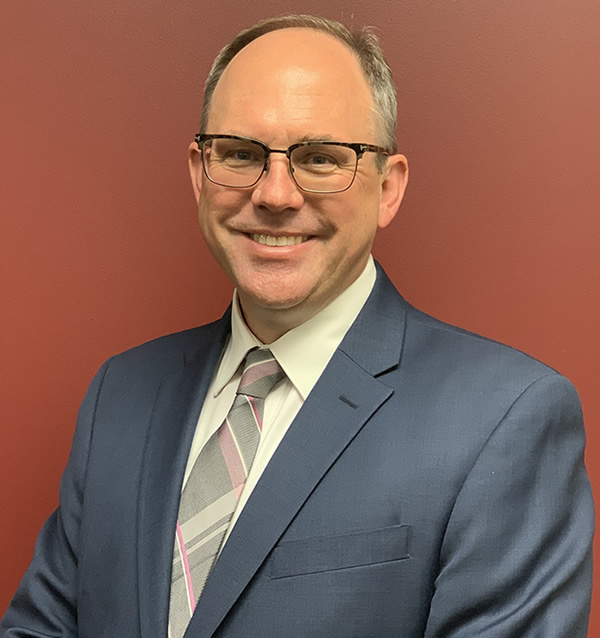 Gregory Robinson - Attorney
Gregory E. Robinson is a small firm practitioner. He received his Bachelor’s Degree from Brigham Young University and his Juris Doctor from the University of Missouri-Columbia. Greg is a member of the Business Law Committee and the Probate and Trust Committee of the Missouri Bar Association. He is also a member of the Bar Association of Metropolitan St. Louis.
READ FULL BIO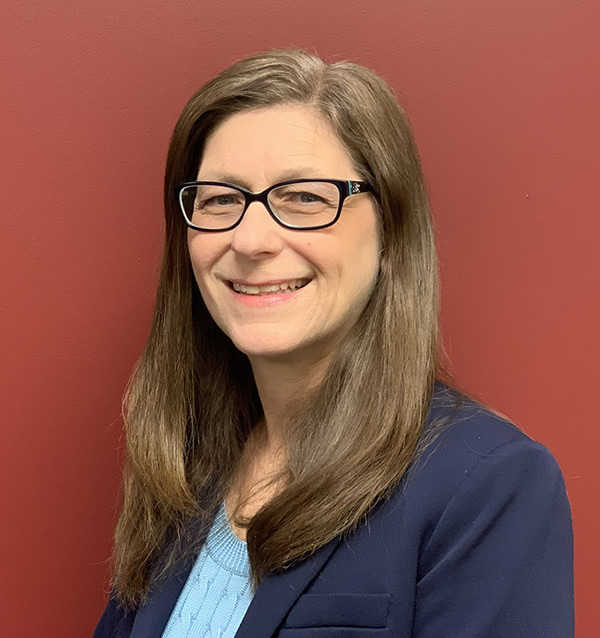 Jacqueline Moore - Attorney
Jacqueline Moore joined the law firm of Gregory E. Robinson, P.C., as an Associate in February of 2015. Jacki obtained her Bachelor of Arts degree in Sociology/Criminal Justice from Northern Illinois University and her Juris Doctorate from Washington University in St. Louis, School of Law. Jacki was admitted to the Missouri Bar in 1991 and to the Illinois Bar in 1992, although she no longer actively practices in Illinois.
READ FULL BIO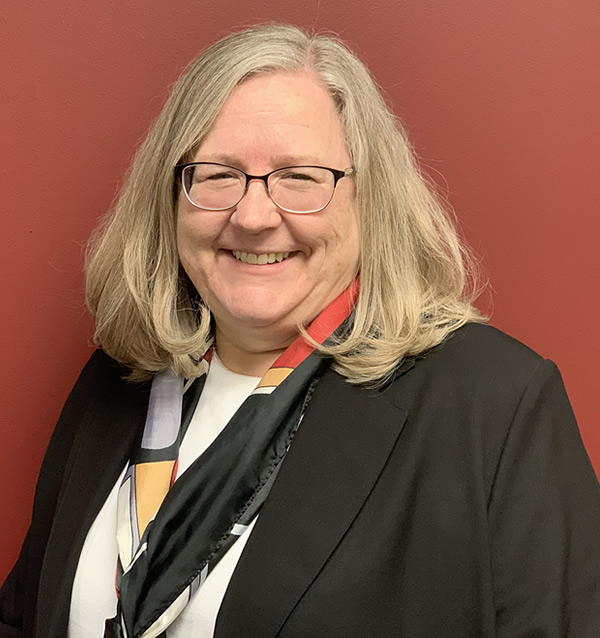 Brenda Moore - Paralegal
Brenda brings 10 years of office administration experience to the offices of Gregory E. Robinson, P.C. With a professional focus on communication and customer service, so client care is an important area of emphasis for her.
READ FULL BIO Jenna Robinson
Jenna graduated cum laude from Brigham Young University-Hawaii (BYU-H) in June of 2023, with a Bachelor’s of Science in Psychology with an emphasis in Legal Studies and Criminal Justice. During her time at BYU-H, she worked as an English Teacher’s Assistant and as a Student Tutor at the Reading and Writing Center.
READ FULL BIO
Request A Consultation
Want to schedule a time to speak with an attorney? Great, we would love to meet you.
Follow Us
We invite you to follow us on social media:


Office Location
670 Mason Ridge Center Drive
Suite 125
St. Louis, MO 63141
TEL: 636-532-9500
Disclaimer
The choice of a lawyer is an important decision and should not be based solely on advertisements. Neither the Supreme Court of Missouri nor The Missouri Bar reviews or approves certifying organizations or specialist designations.
The information presented in this website by Gregory E. Robinson, P.C. is intended as general information and is not legal advice. You should contact an attorney to learn how the law applies to your specific situation. We welcome your phone calls as well as electronic inquiries.
Use of this web site, communicating through this web site or use of electronic email does not create an attorney-client relationship. Email is not a secure form of communication, please do not send confidential or sensitive information.
The information in this web site is not guaranteed to be correct, complete, or current. We make no warranty, expressed or implied, about the accuracy or reliability of the information at this website or at any other website to which this site is linked.
Images on the site include simulated portrayals of lawyers, clients, scenes and events.
The copyrights in all text, images, screens and other materials provided on this Site are owned by Gregory E. Robinson, P.C., and/or by third parties.