





we help people protect and transfer their wealth
CHOOSE A TOP ST. LOUIS LAW FIRM
We concentrate our practice in the areas of Estate Planning, Trust Administration, Probate, Asset Protection and Business Law.
Our goal is to serve our clients in such a manner so that they feel comfortable referring us to their family and friends.
We charge reasonable fees that are tailored to our client’s needs.
Our attorneys have more than 5 decades of combined experience helping our clients.
Our staff responds promptly to all client communications, whether by phone, email or through our secure client portal.
All of our clients receive personalized attention based upon their unique situation.




Gregory E. Robinson, P.C.
Small Estate Affidavit

A very popular method to shortcut the full probate process is the small estate affidavit as set forth in 473.097 RSMO. The Statute provides that the affidavit can be used if the value of the entire estate, less liens, debts and encumbrances, does not exceed forty thousand dollars. The Statute thus allows for offsets of liens and certain debts so that the net estate does not exceed forty thousand dollars. The Statute requires that thirty days have elapsed before applying for a small estate affidavit. The court may also require that a bond be posted. Notice of the Small Estate Affidavit must be published in a local paper once a week for two consecutive weeks if the value of the estate is greater than fifteen thousand dollars. The small estate affidavit is frequently utilized by the adult children of the decedent or by the siblings of a decedent. There are, however, various concerns that can arise and that must be examined before attempting to utilize a small estate affidavit, particularly when attempting to perfect, or to clear, title on real estate of the decedent.
SCHEDULE CONSULTATION
Refusal of Letters
There are two types of refusal letters provided by Missouri statute to dispense with the probate process:
- Refusal of letters to a surviving spouse or unmarried minor children; and
- Refusal of letters to a creditor.
Refusal of letters of a surviving spouse or unmarried minor children
Section 473.090 RSMO sets forth the process by which to refuse to issue letters, namely, when to refuse to appoint a personal representative for the estate of the decedent. Section 473.090 RSMO allows for a refusal of letters to the surviving spouse or unmarried minor children when the value of the decedent’s estate is not greater in an amount as exempt property, as set forth under Section 474.250 RSMO, and the allowance for maintenance to the surviving spouse or unmarried minor children as per Section 474.260 RSMO.
Section 474.250 RSMO provides that the exempt property, regardless of value, belongs to the surviving spouse, or if there is no surviving spouse, to the unmarried minor children. Section 474.260 RSMO provides that in setting the amount of the support allowance, the court may consider the previous standard of living of the applicant, the condition of the estate, the income and other assets available to the applicant.
The statutes regarding a refusal of letters to the surviving spouse or unmarried minor children do not specify a maximum dollar limit on the value of the assets that can be included when utilizing a refusal. Local court rules, however, might impose limits on the dollar amounts that can be included when utilizing a refusal of letters.
Refusal of Letters to a Creditor
Section 473.090.2 RSMO limits the use of a refusal of letters to a creditor. The Statute provides that the estate of the decedent cannot be greater than fifteen thousand dollars and the refusal cannot be utilized if there is a widow, widower or unmarried minor children. Also, the court may require that a bond be posted before granting the refusal. Section 473.090.6 RSMO also allows for any person to apply for refusal if they have paid the funeral expenses or the debts of the decedent.
SCHEDULE CONSULTATION
Duties and Powers of Legal Representatives

One of the requirements for granting letters testamentary or of administration is contained in Section 473.017 RSMO. That Statute provides that if the letters are issued the applicant will make a perfect inventory of the estate, pay the debts and legacies, if any, and account for and distribute or pay all assets which come into the possession of the personal representative or administrator, and perform all things required by law during the administration of the estate.
The Statute imposes a duty on the person administering the estate to inventory all the assets of the deceased. Obtaining and assembling the information required to complete the inventory can be very difficult and time consuming.
Appraisers may need to be hired who are qualified and disinterested in the estate to assist in ascertaining the fair market value as of the date of death for any asset for which the value is not easily determined or “subject to reasonable doubt.”. Typically, an appraiser will be used is the estate includes real estate owned by the decedent. Additionally, real estate appraisers are typically retained to obtain the value of a leasehold interest. Other types of assets that are subject to reasonable doubt and which might require hiring an appraiser could include jewelry, art collections, stamp collections, coin collections, button collections or antiques. Each case is fact specific and the personal representative or administrator will need to review the assets of the estate and determine if the services of an appraiser are necessary in order to file the inventory.
There are other steps which might have to be taken in order to comply with the fiduciary duty requirements. These can include obtaining a Federal Employer Identification Number on behalf of the estate, filing income tax returns for both the decreased and the probate estate, filing an estate tax return, sometimes referred to as the death or inheritance tax, changing locks on any real estate and making sure property is properly insured and maintained during the administration process.
Some other powers and duties involved in administering a probate estate are set forth in Section 473.810 RSMO. Some of these other powers include making repairs to buildings or property, voting stocks, paying taxes other than income and estate taxes, paying assessments and other expenses incident to the administration of the estate, prosecuting or defending claims against the estate, selling, mortgaging or leasing any real or personal property of the estate, satisfying and settling claims, and distributing the assets of the estate.
If there are claims against the decedent’s estate, these claims will have to be filed in the probate estate. There is a time limit set forth by Section 473.360 RSMO which governs when most claims must be filed against the estate of the decedent. Section 473.360.1 RSMO provides in part that all claims against the estate of a deceased person, other than costs and expenses of administration, and certain other claims, must be filed probate division of the circuit court within six months after the date of the first published notice of letters testamentary or of administration or else they are forever barred. This time period can be shorted to two months if notice was actually mailed to, or served upon such creditor.
If claims have been filed against the estate, the personal representative or administrator will have to determine how much should be paid to the creditor. Sometimes the attorney for the personal representative will schedule a hearing on the claim in order to determine the amount that should be paid on the claim.
Each estate is unique and the actions which might have to be taken by the personal representative in one estate might not have to be taken in another estate.
SCHEDULE CONSULTATION
Distributing the Assets to the Beneficiaries

After the appropriate statutes of limitation have passed, and all claims and taxes have been paid, the personal representative or administrator has a duty to distribute the assets which remain in the estate to either the beneficiaries named in the decedent’s will or to the heirs at-law The person administering the estate, whether a personal representative or administrator must follow certain rules before the assets can be distributed. Those rules are different based on whether the administration is supervised by the court or independent.
Although receiving the asset from the estate is the most important concern of the beneficiaries, the most important concern for the person administering the estate is making sure they administer the estate in such a manner so as to receive a discharge from personal liability in regards to that administration.
SCHEDULE CONSULTATION
Probate Process

Probate is the legal process one's estate must go through after he or she dies. The probate process requires the attention and skill of an experienced estate planning lawyer as most people are not competent to execute a Will or probate an estate. Probate law involves paperwork and court appearances. Fees for the estate planning attorney as well as court costs are paid out of the estate. The process to probate an estate has several functions, including:
- Proving the Will of a deceased person is valid;
- Identifying and inventorying the deceased person's property;
- Having the property appraised;
- Paying debts and taxes; and
- Distributing the remaining property as the decedent's Will describes, or according to State law if no Will exists.
The Probate Process
Probate can be described as the process by which the decedent’s will is admitted or rejected to probate, the creditors paid and the assets distributed to the beneficiaries. The term probate is derived from the latin word, probatum, meaning a thing proved or judged. What we are proving in the probate court is whether the decedent’s will is valid or invalid. The probate process can be time consuming and expensive. There are a few methods in Missouri to shortcut the full blown probate process. The Missouri licensed attorneys at the law firm of Gregory E. Robinson, P.C., have the experience necessary to advise you if one of these shortcuts can be utilized for your case.
The statutory shortcuts available in Missouri to dispense with the probate process are:
- Refusal of letters to a surviving spouse or unmarried minor children;
- Refusal of letters to a creditor; and
- Small estate affidavit.
The first two options are known as refusal of letters and are found at Section 473.090 RSMO. The last option is known as an affidavit of distribution and is found at Section 473.097 RSMO.
All three of these shortcuts were first created in Missouri in 1877. Many other States have adopted, in some form or another, these shortcuts.
Beginning the Probate Process
If one of the shortcuts discussed above is not available, then it might be necessary to open up a full probate proceeding to administer the estate of the decedent by utilizing the full probate court process.
When a personal dies having executed a will, it is said the person dies testate. When a person dies without having executed a will, it is said the person dies intestate. When an individual dies testate, the person named in the will to administer the estate of the decedent is known as the personal representative. When an individual dies intestate, the person who administers the estate of the decedent is known as the administrator.
With more than 50 years of combines experience, the attorneys at the law firm of Gregory E. Robinson, P.C. can help you through the entire probate process. We welcome the opportunity to speak with you and help you learn what steps are necessary for your loved one's estate.
SCHEDULE CONSULTATION
Page 2 of 2
Warning: Illegal string offset 'active' in /home/kexitnck/public_html/templates/corpway/html/pagination.php on line 90
Warning: Illegal string offset 'active' in /home/kexitnck/public_html/templates/corpway/html/pagination.php on line 96
Warning: Illegal string offset 'active' in /home/kexitnck/public_html/templates/corpway/html/pagination.php on line 90
Warning: Illegal string offset 'active' in /home/kexitnck/public_html/templates/corpway/html/pagination.php on line 96
Meet Your Team
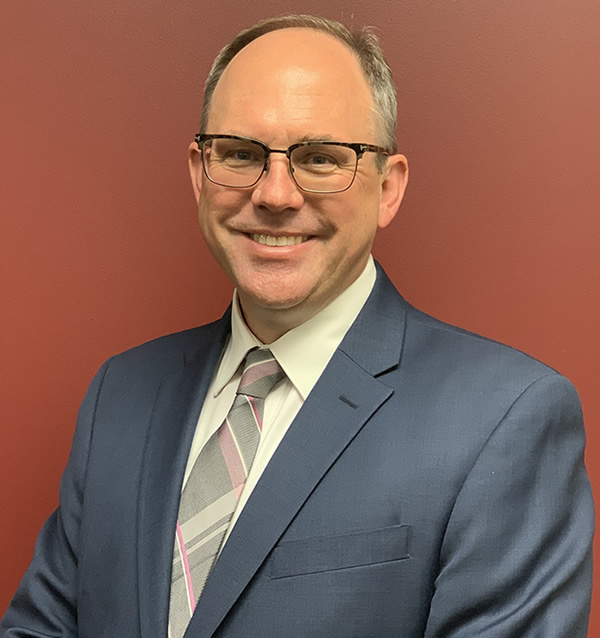 Gregory Robinson - Attorney
Gregory E. Robinson is a small firm practitioner. He received his Bachelor’s Degree from Brigham Young University and his Juris Doctor from the University of Missouri-Columbia. Greg is a member of the Business Law Committee and the Probate and Trust Committee of the Missouri Bar Association. He is also a member of the Bar Association of Metropolitan St. Louis.
READ FULL BIO Jacqueline Moore - Attorney
Jacqueline Moore joined the law firm of Gregory E. Robinson, P.C., as an Associate in February of 2015. Jacki obtained her Bachelor of Arts degree in Sociology/Criminal Justice from Northern Illinois University and her Juris Doctorate from Washington University in St. Louis, School of Law. Jacki was admitted to the Missouri Bar in 1991 and to the Illinois Bar in 1992, although she no longer actively practices in Illinois.
READ FULL BIO Brenda Moore - Paralegal
Brenda brings 10 years of office administration experience to the offices of Gregory E. Robinson, P.C. With a professional focus on communication and customer service, so client care is an important area of emphasis for her.
READ FULL BIO Jenna Robinson
Jenna graduated cum laude from Brigham Young University-Hawaii (BYU-H) in June of 2023, with a Bachelor’s of Science in Psychology with an emphasis in Legal Studies and Criminal Justice. During her time at BYU-H, she worked as an English Teacher’s Assistant and as a Student Tutor at the Reading and Writing Center.
READ FULL BIO
Request A Consultation
Want to schedule a time to speak with an attorney? Great, we would love to meet you.
Follow Us
We invite you to follow us on social media:


Office Location
670 Mason Ridge Center Drive
Suite 125
St. Louis, MO 63141
TEL: 636-532-9500
Disclaimer
The choice of a lawyer is an important decision and should not be based solely on advertisements. Neither the Supreme Court of Missouri nor The Missouri Bar reviews or approves certifying organizations or specialist designations.
The information presented in this website by Gregory E. Robinson, P.C. is intended as general information and is not legal advice. You should contact an attorney to learn how the law applies to your specific situation. We welcome your phone calls as well as electronic inquiries.
Use of this web site, communicating through this web site or use of electronic email does not create an attorney-client relationship. Email is not a secure form of communication, please do not send confidential or sensitive information.
The information in this web site is not guaranteed to be correct, complete, or current. We make no warranty, expressed or implied, about the accuracy or reliability of the information at this website or at any other website to which this site is linked.
Images on the site include simulated portrayals of lawyers, clients, scenes and events.
The copyrights in all text, images, screens and other materials provided on this Site are owned by Gregory E. Robinson, P.C., and/or by third parties.